Author: 952325pwpadmin
-
How Causal Discovery Actually Work
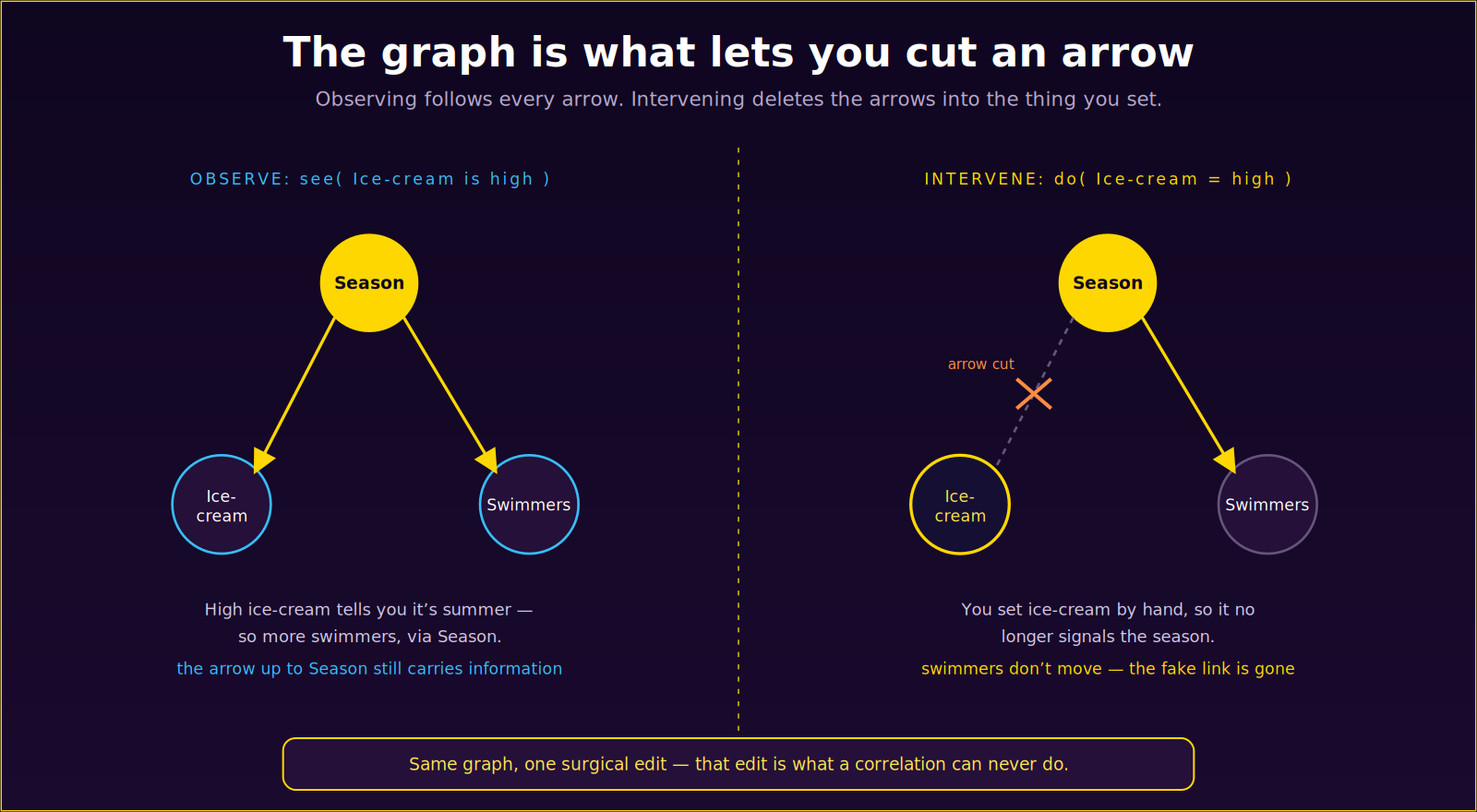
“Causal graph” sounds like jargon, but the idea is almost embarrassingly simple — and once it clicks, a lot of confusing things about data suddenly make sense. So let’s build one from scratch, with no equations, and see what it’s actually for. Nodes and arrows — that’s the whole vocabulary A causal graph has exactly…
-
Fluent about physics, not grounded in it: LLMs and physical world models.
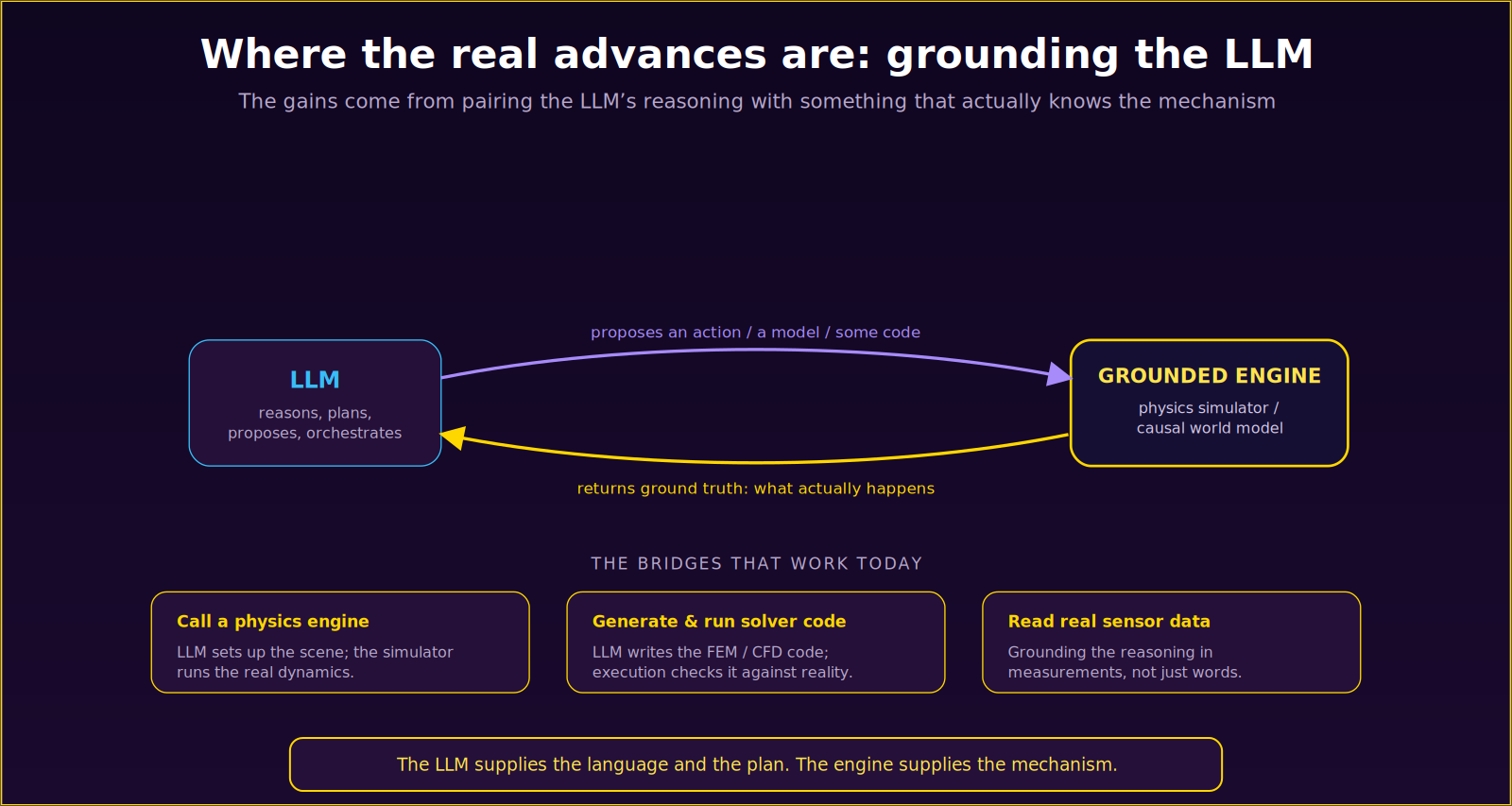
Ask a frontier language model a hard physics question today and it will likely nail it. The latest models score near-perfect on university-level classical mechanics, electromagnetism, and quantum problems; some now reach gold-medal performance on Physics Olympiad exams. Native multimodality has closed a gap that dogged earlier systems — they can read a diagram, interpret…
-
World Models Are Having a Moment — Here’s What’s Missing
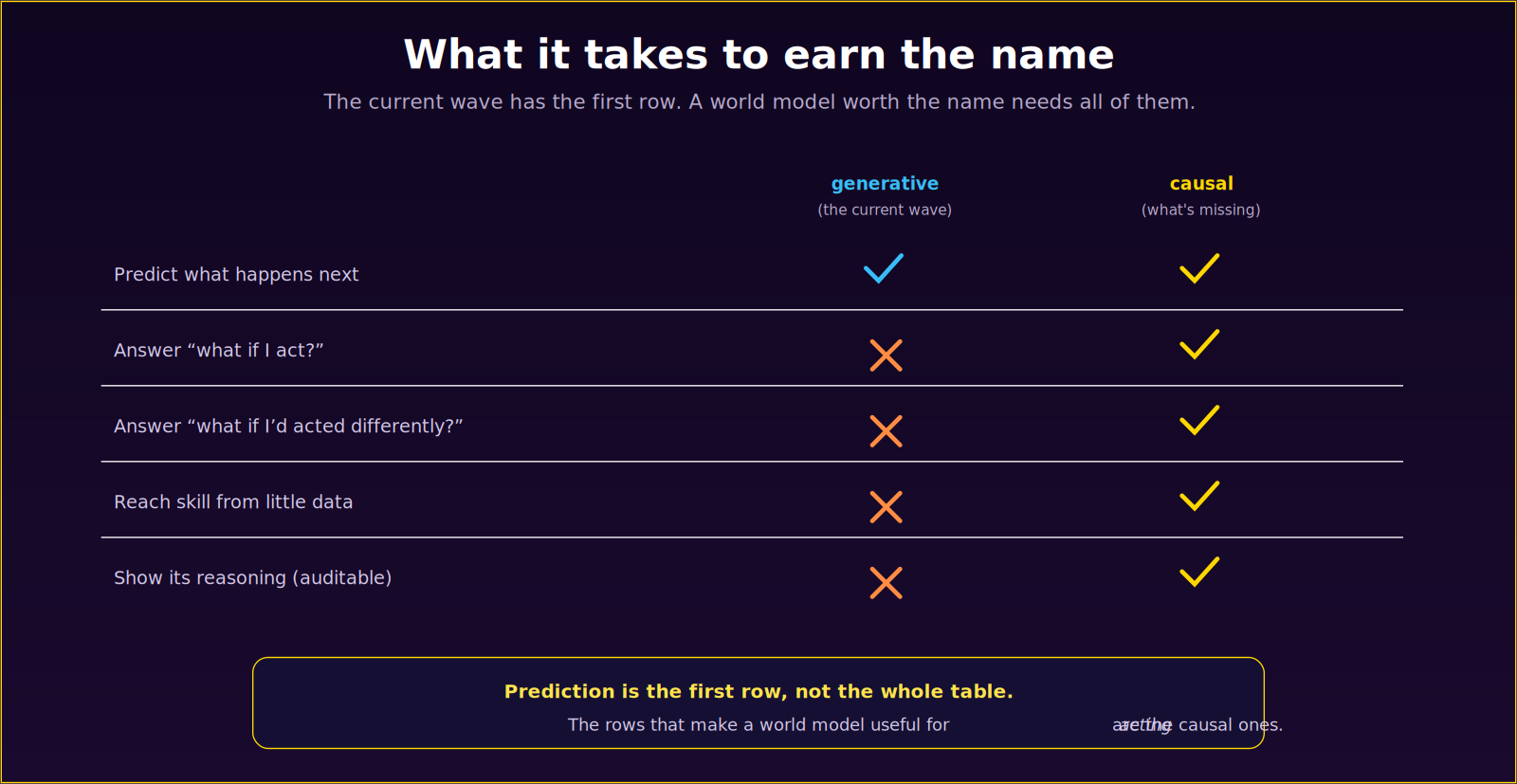
World models are having a moment. After a decade as a mostly academic idea, they have surged to the center of the AI conversation. Google DeepMind’s Genie, NVIDIA’s Cosmos, Fei-Fei Li’s World Labs, and Yann LeCun’s new world-model-focused venture have all made headlines; MIT Technology Review, Nature, and TIME have each run features declaring world…
-
The Most Expensive Question in AI: “What If We’d Done It Differently?”
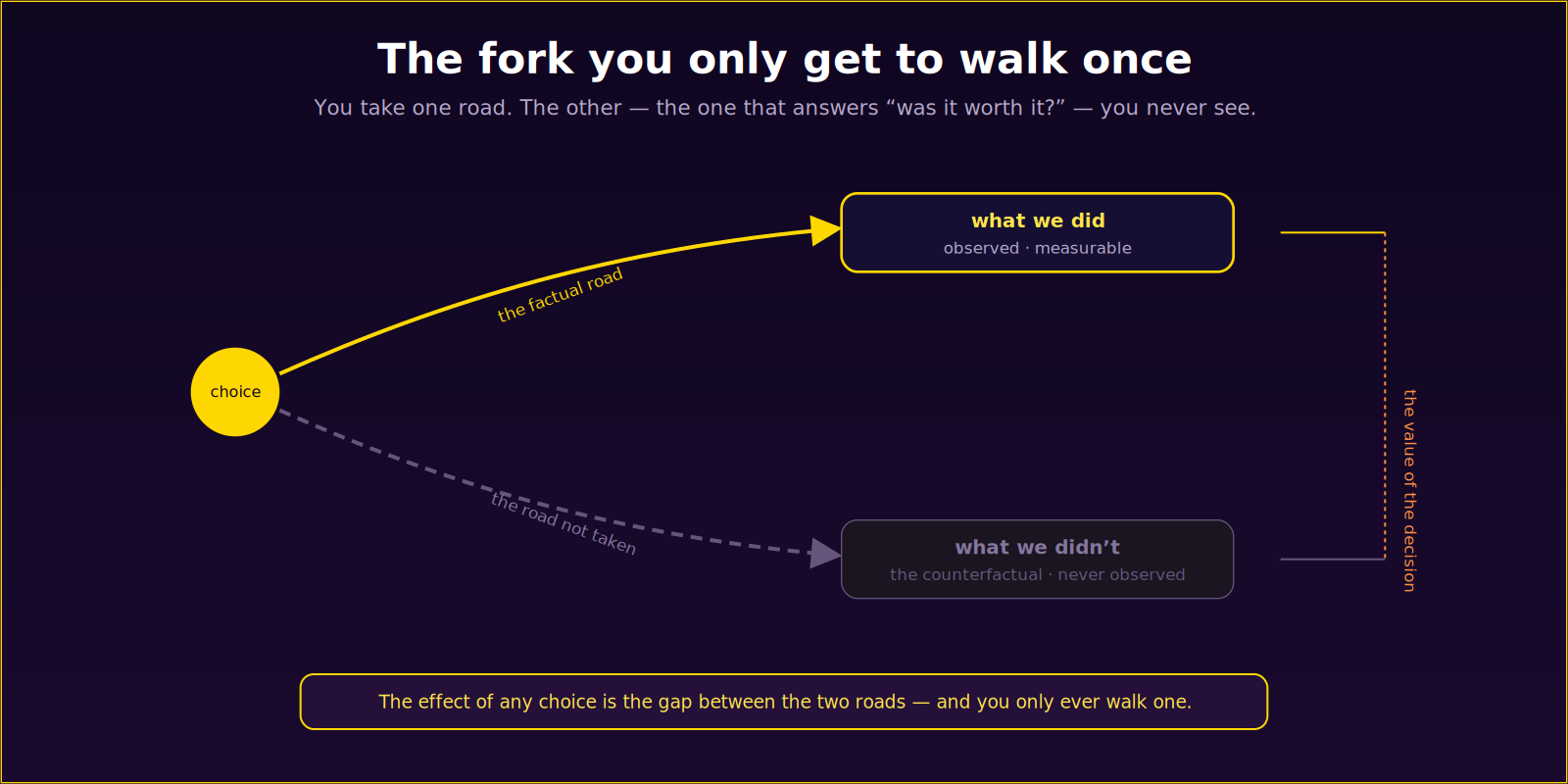
There is a question that sits underneath nearly every important decision, and it is almost never answered honestly. After the campaign runs, the treatment is given, the policy passes, the trade is placed, someone asks: did it work? And the honest answer requires knowing something you can never directly see — what would have happened…
-
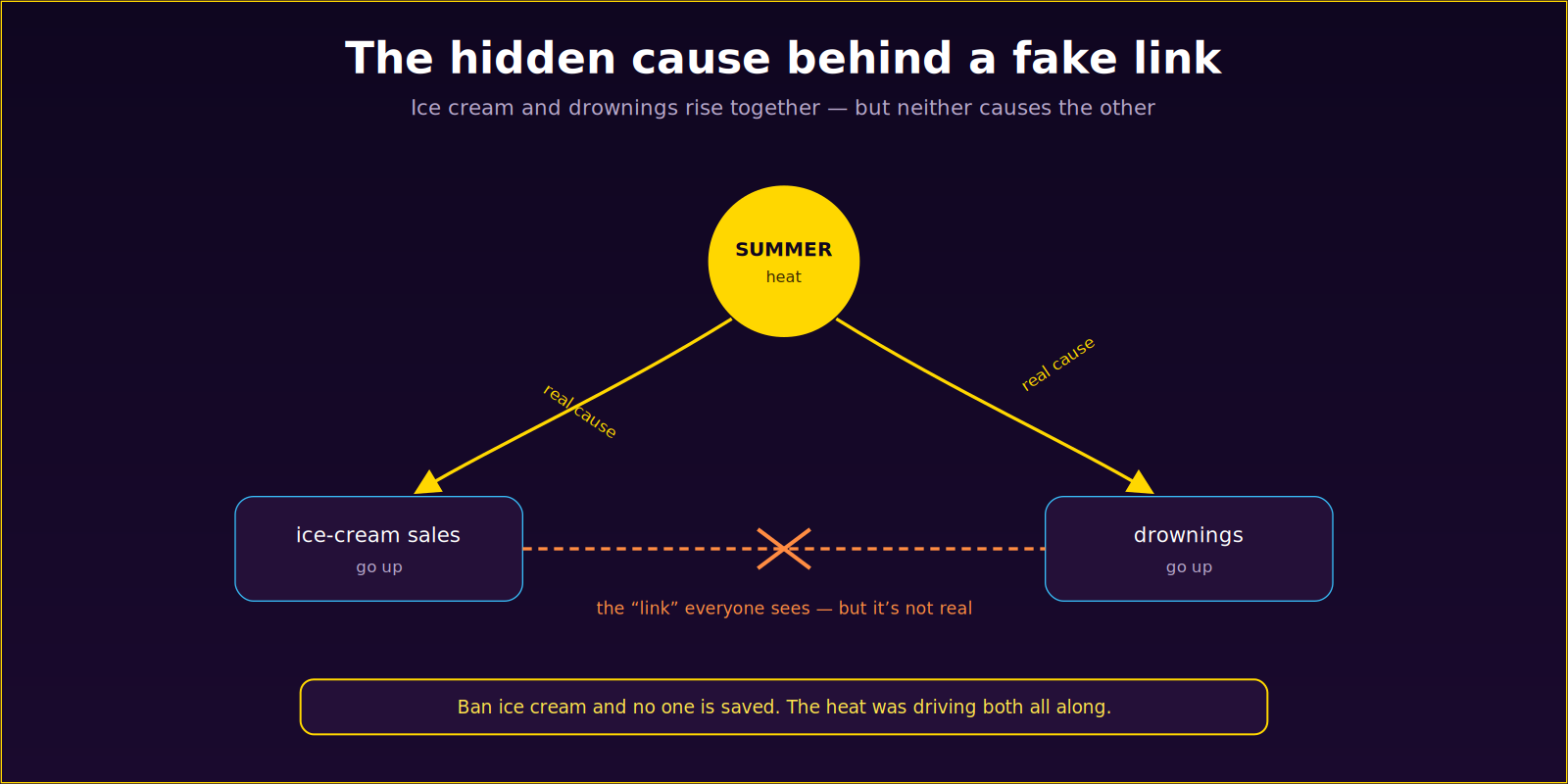
Ice Cream Doesn’t Cause Drowning
Here is one of the most reliable statistics you will ever meet: on the days when a town sells the most ice cream, the most people drown. The numbers are real. The correlation is strong. And it has fooled exactly no one — because everybody knows the missing piece. It’s summer. Hot days sell ice…
-
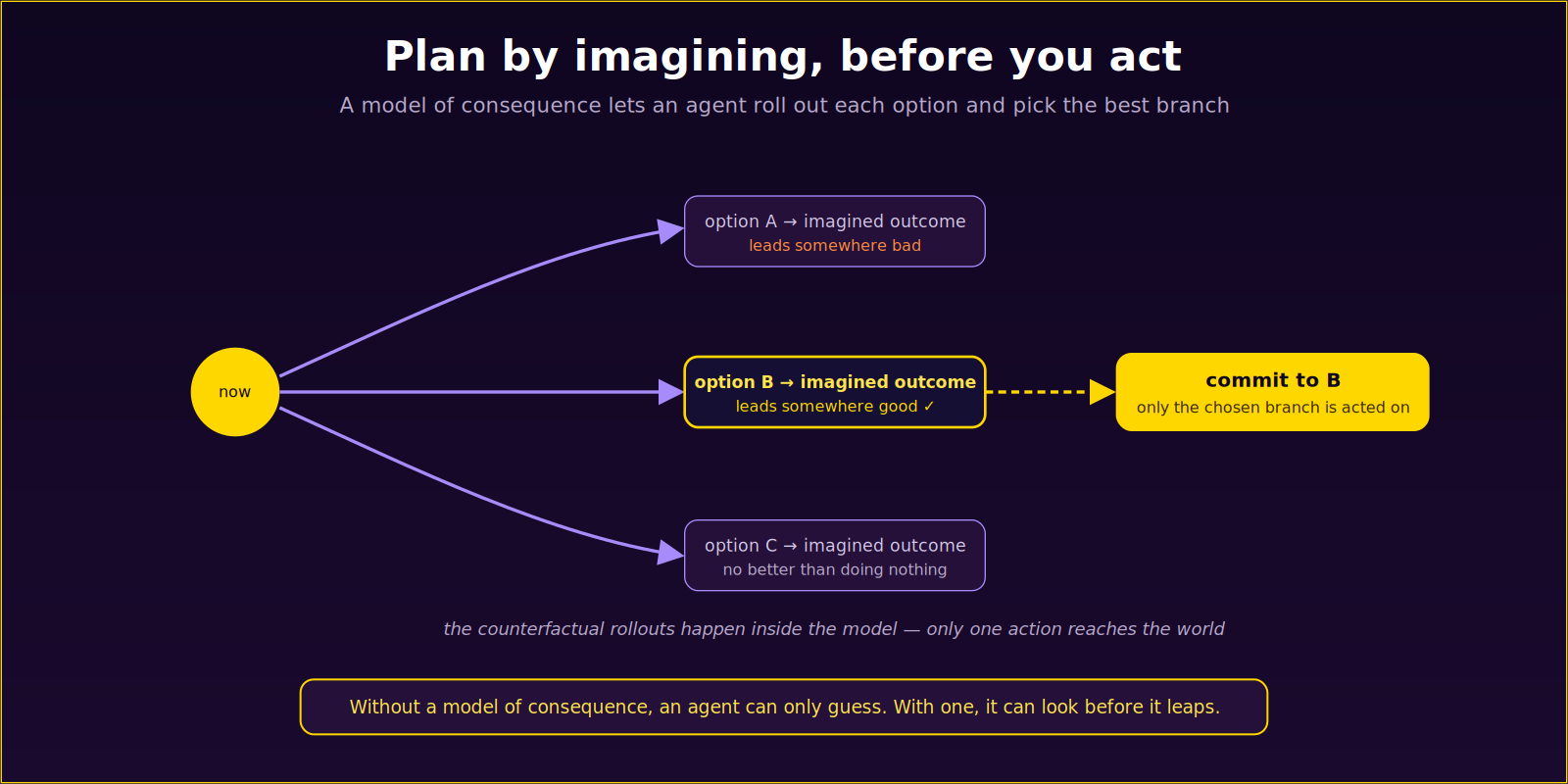
Why Agentic AI Needs a Model of Consequence
The center of gravity in AI is shifting. For years the goal was a better predictor — a system that, shown the world so far, tells you what comes next. Now the ambition is agentic: systems that don’t just describe the world but plan in it, make decisions, and take actions on our behalf. That…
-
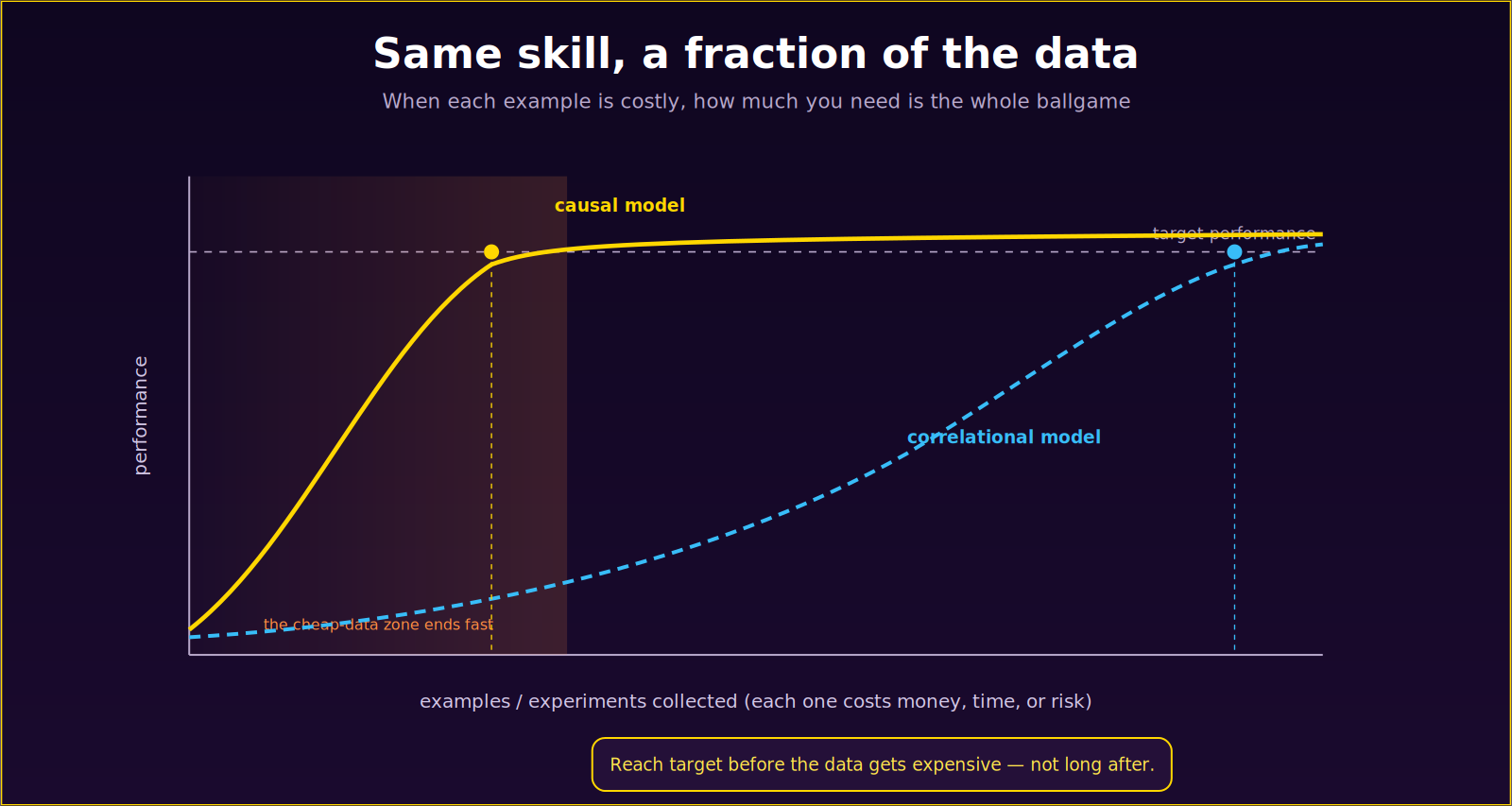
Data-Efficiency as a First-Class Advantage
Every AI system runs on data, but not every system runs on the same amount of it — and in the real world, that difference decides what is possible. Where data is abundant and cheap, a data-hungry model is fine. Where each example costs a wet-lab run, a wrecked prototype, a month of a physical…
-
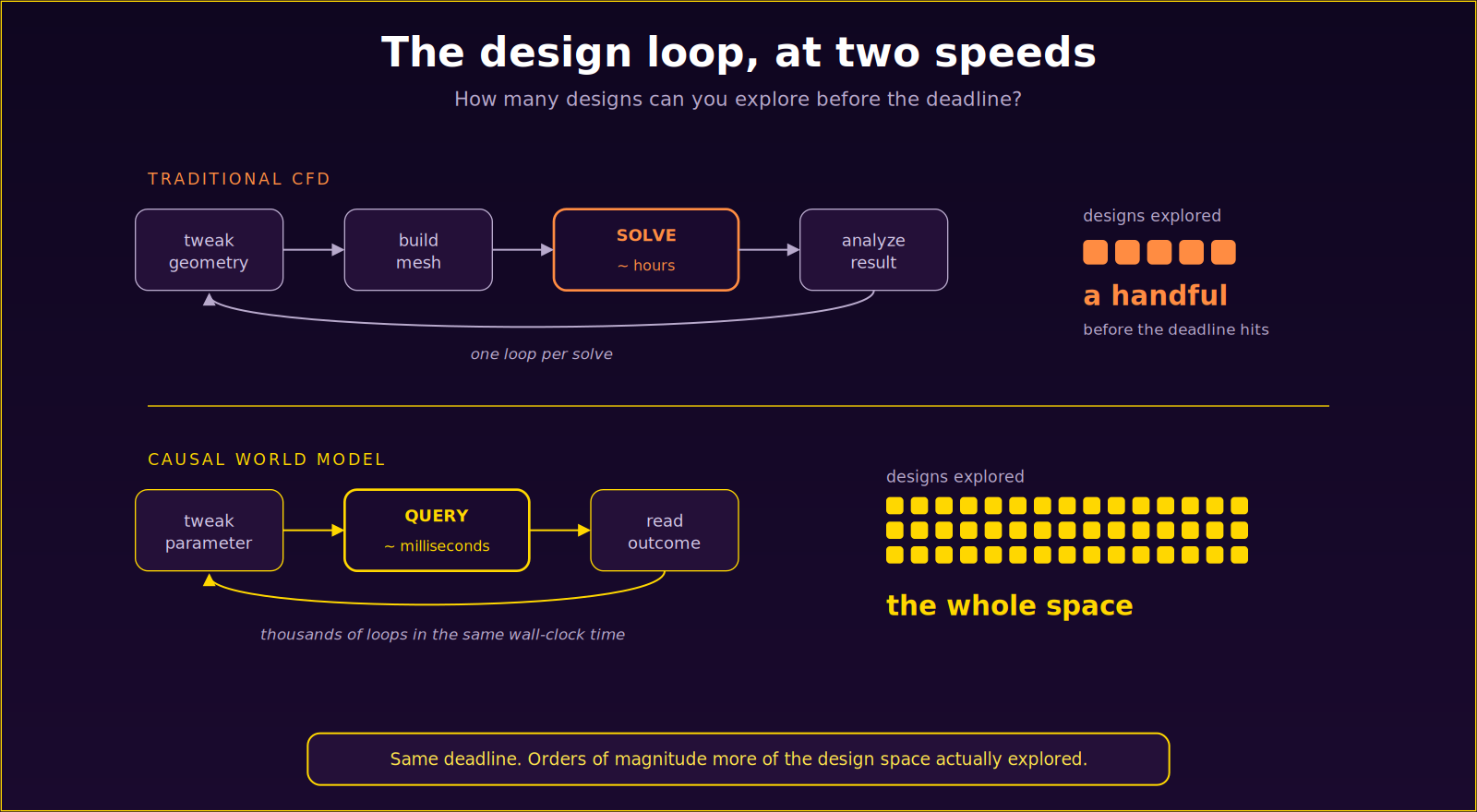
Counterfactual aerodynamics: what a causal world model does for CFD
Every aerodynamicist knows the ritual. Tweak the geometry. Rebuild the mesh. Launch the solver. Wait — sometimes minutes, often hours, occasionally overnight — while it churns through millions of cells resolving the flow. Read the result. Then, having learned one thing about one design, tweak the geometry again and start the whole ritual over. Computational…
-
Counterfactual aerodynamics: what a causal world model does for CFD
Every aerodynamicist knows the ritual. Tweak the geometry. Rebuild the mesh. Launch the solver. Wait — sometimes minutes, often hours, occasionally overnight — while it churns through millions of cells resolving the flow. Read the result. Then, having learned one thing about one design, tweak the geometry again and start the whole ritual over. Computational…
-
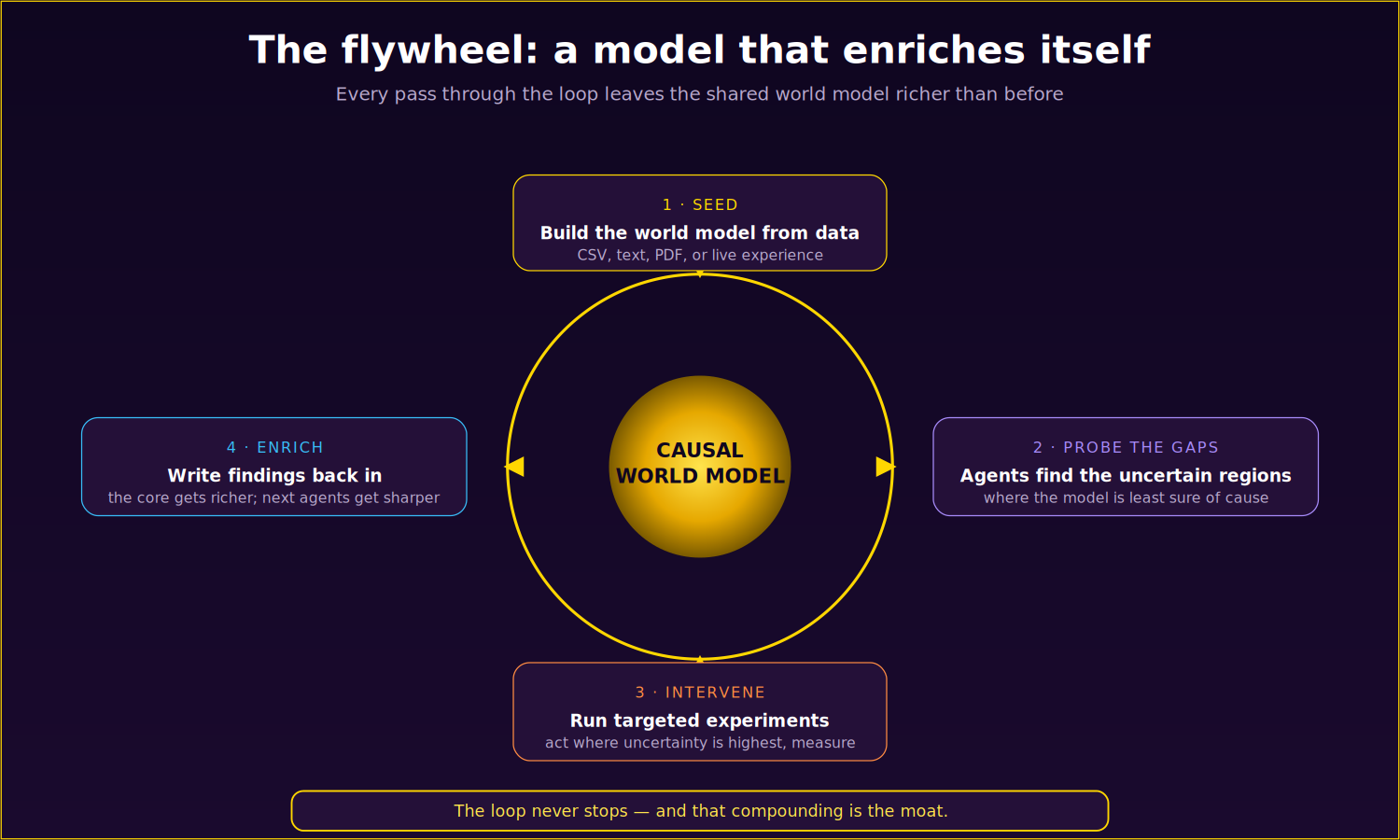
The model that trains itself: the flywheel behind a self-enriching world model
Most machine-learning models are frozen the moment they finish training. From that point they only decay — the world drifts, the data ages, and the model that was state-of-the-art on launch day slowly becomes a liability. You paid for it once; it depreciates from there like any other fixed asset. A causal world model built…
-
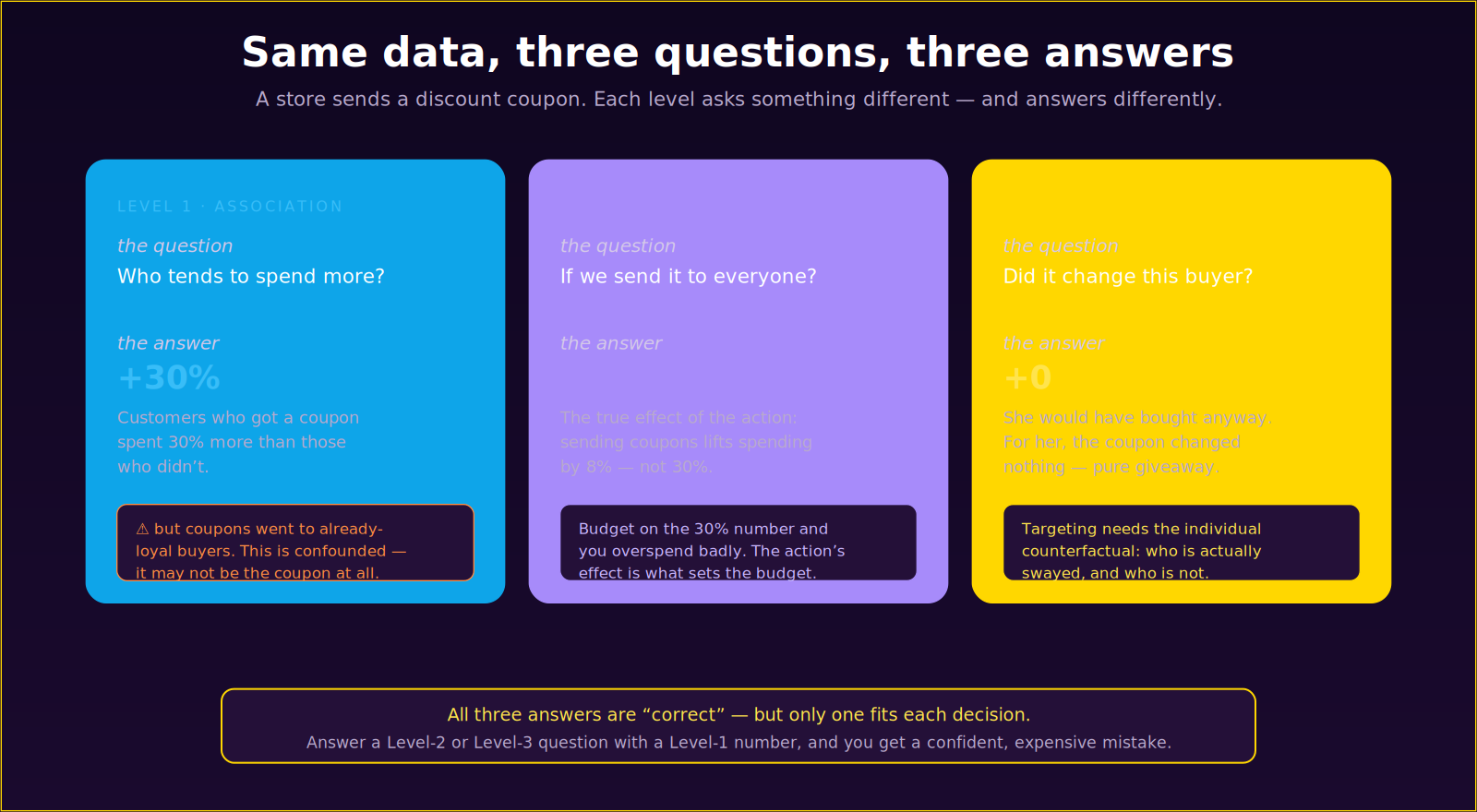
Correlation, intervention, counterfactual: the three levels every AI system lives on
Ask an AI system a question and, underneath the answer, it is operating at one of three levels. The levels form a hierarchy — each one answers a harder question than the last, and each demands more than the one below. Almost all of today’s AI is stuck on the bottom level. Almost every decision…
-
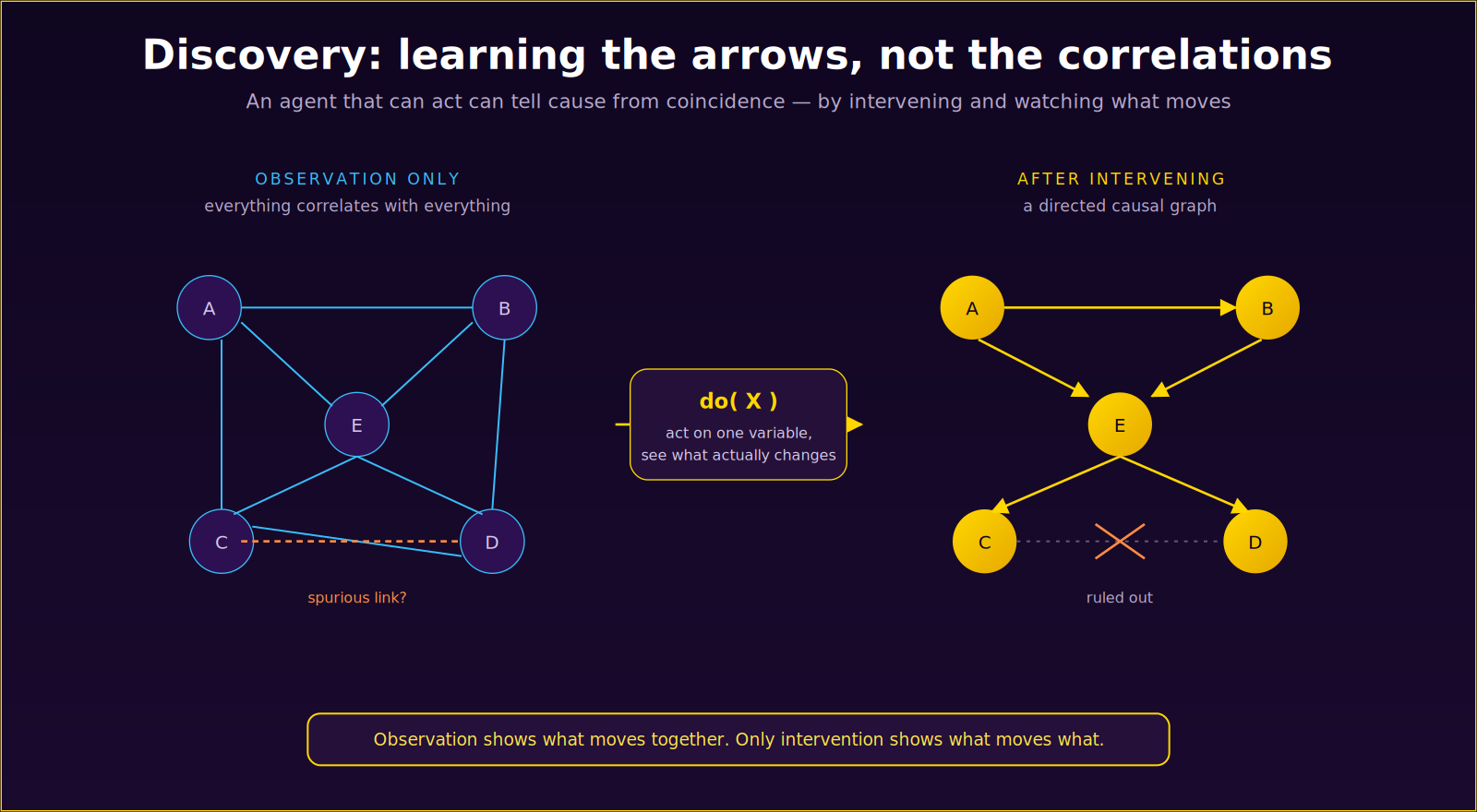
Causal discovery and its relationship with Reinforcement learning (RL)
A reinforcement learning agent is, whether it knows it or not, running experiments. Every action it takes is an intervention on the world — a deliberate do this — followed by an observation of what happened next. That is the exact shape of a causal experiment. An RL agent is a scientist that never stops…
-
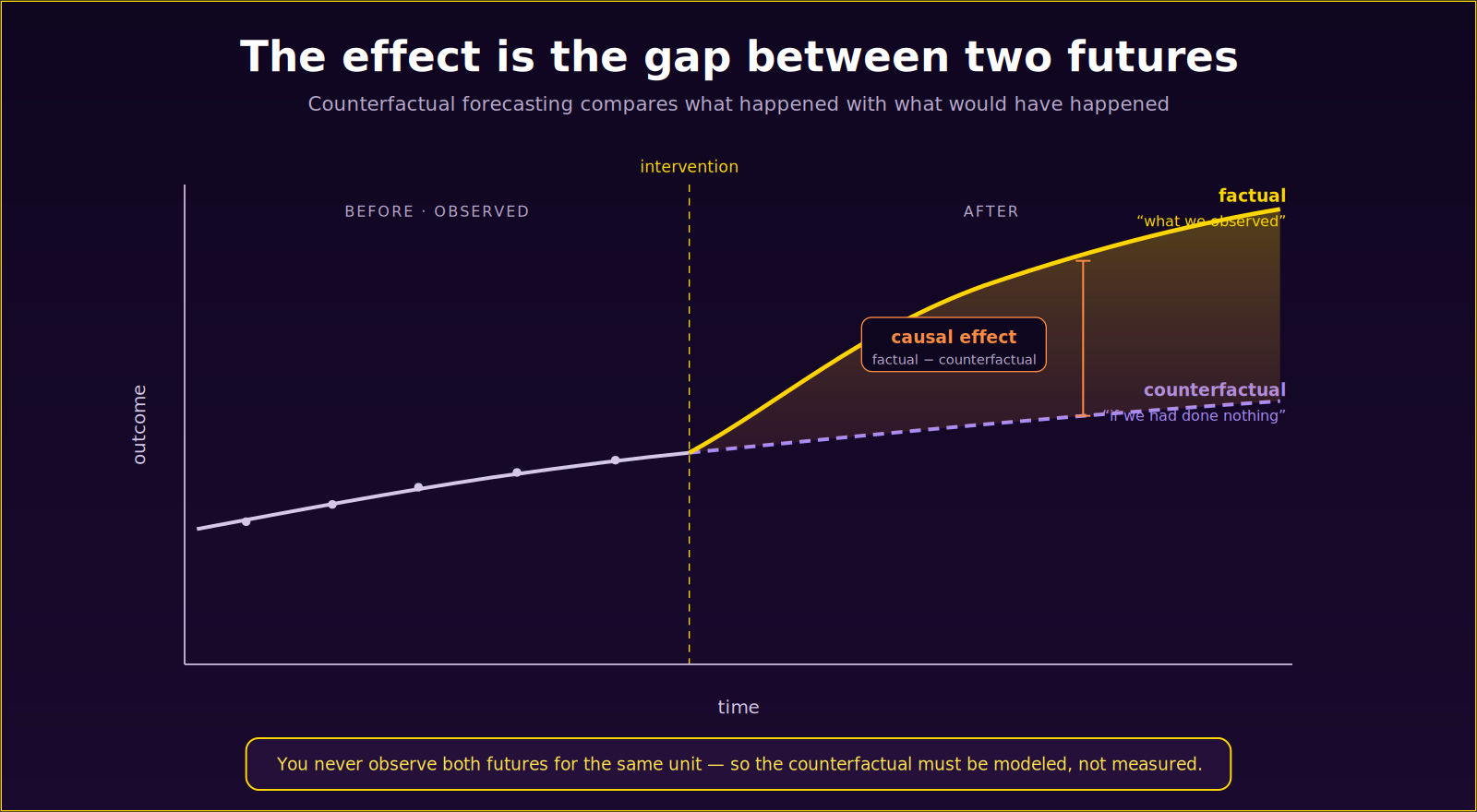
Prediction Tells You What. Counterfactuals Tell You What If.
A weather forecast tells you it will rain tomorrow. Useful. But it never has to answer the harder question: would it have rained if we hadn’t seeded the clouds? A sales forecast says revenue will climb next quarter. Also useful — until someone asks the question that actually decides the budget: would revenue have climbed…
-
Why physics needs a world model
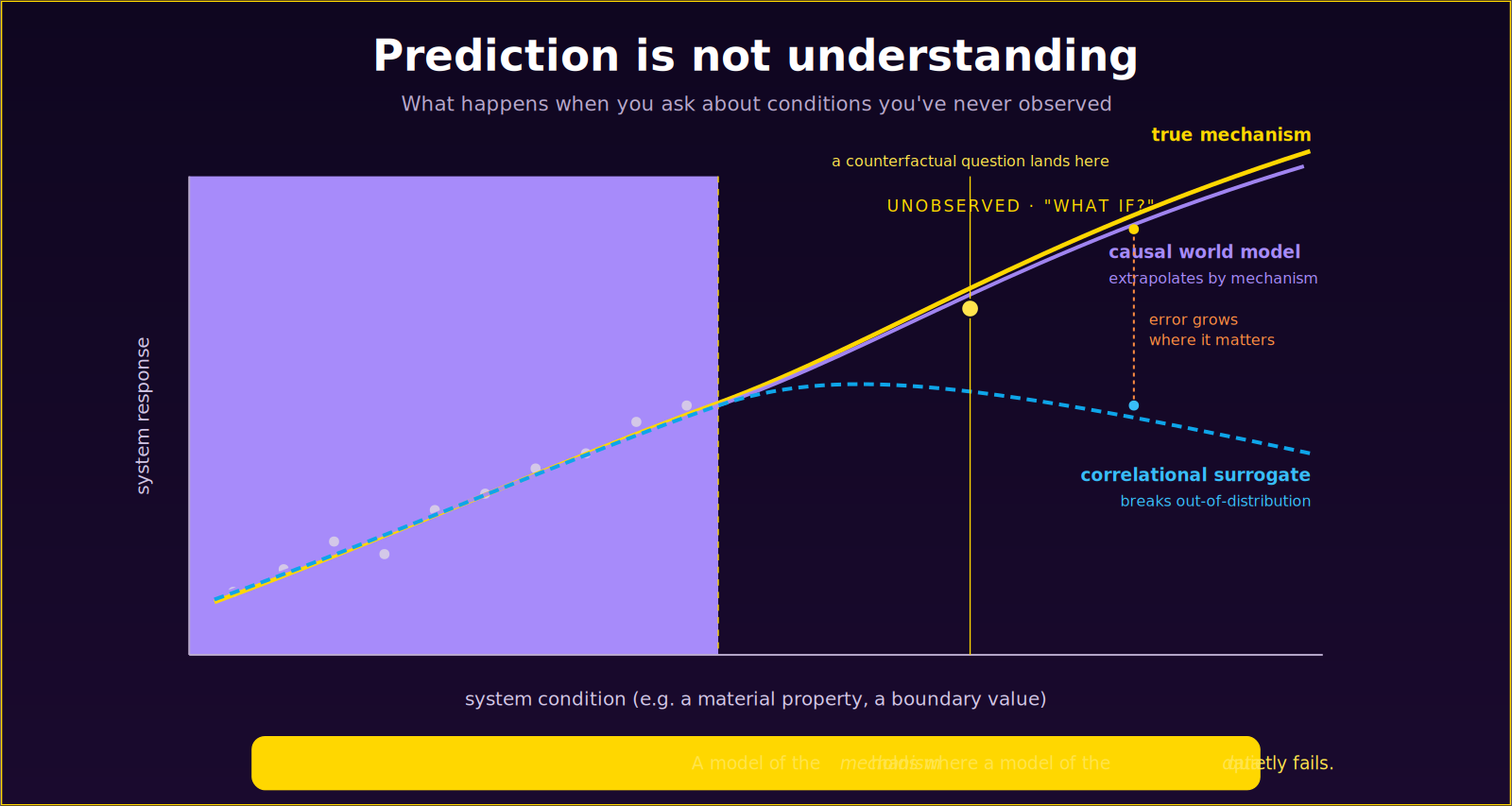
Why physics needs a world model For generations, simulating a physical system has meant one thing: write down the governing equations and solve them. Navier–Stokes for a fluid, the heat equation for a thermal field, the equations of motion for a structure under load. Then discretize space into a mesh, step forward in time, and…